Water on a flat roof after rain is not always a problem. Water that is still there two days later usually is.
Standing water adds weight, wears out the waterproof layer faster and leads to leaks. In Scotland, frozen water can also crack the surface over winter.
GRR Roofing is based in Greenock and repairs and replaces flat roofs across Inverclyde and the west of Scotland. This guide explains what ponding is, what causes it and what to do about it, whether you own the roof or manage it for tenants.
What counts as ponding?
A little water held behind a lap or a small dip for a few hours is normal. Roofing guidance generally treats water that is still sitting there 48 hours after rain has stopped as ponding.
The 48-hour test is the simplest check you can do from the ground or a window.
1. The roof was not built with enough slope
A flat roof is never completely flat. It needs a gentle slope, called a fall, so water runs to a drain or gutter. Industry guidance suggests a design fall of around 1:40 and a minimum of 1:80 once built. If the fall is too shallow, water has nowhere to go.
If a roof has ponded since the day it was finished, poor falls are the most likely cause.
2. Blocked outlets and gutters
Leaves, moss and debris can block the outlet where water leaves the roof. Water then backs up and pools.
This is the cheapest cause to fix. Clear the outlet, and check whether the gutter beneath it is blocked too. If it keeps happening, our fascia, soffit and gutter service covers cleaning and replacement.
3. A sagging deck
Over time the timber boards or joists under the roof can warp, sag or rot. That creates a low spot where water collects.
A sagging deck cannot be fixed by recoating the surface. The structure underneath needs repairing.
4. A worn or rippled waterproof layer
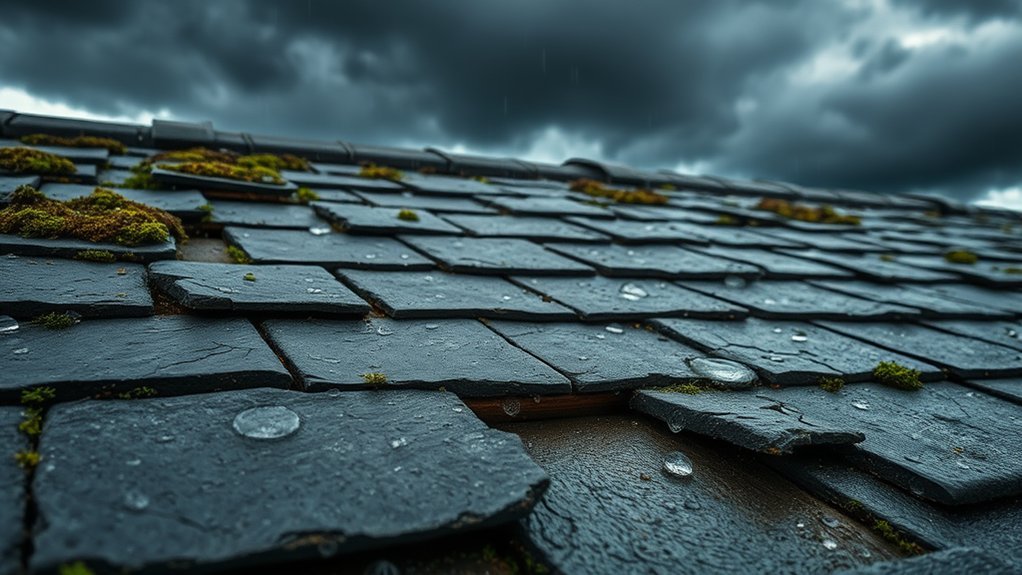
Ageing membranes can stretch, ripple or lift at the seams. Water then pools behind the ripples and finds its way through gaps.
5. Poorly placed outlets
Even a roof with good falls can pond if the outlet sits too high or in the wrong place. This often shows up on extensions or after other work has been done on the roof.
6. Added weight or blocked flow
Roof units, extra insulation layers or tradespeople’s work can change how water flows. A new fitting that sits across the water’s path is a common culprit.
7. Heavy Scottish rainfall and frost
Scotland’s weather makes every weakness worse. Heavy rain overwhelms drains. Frost freezes the standing water, which expands and can crack the surface.
If you want a professional assessment of your roof before a small problem becomes an expensive one, book a free roof survey and we’ll tell you exactly where you stand.
What to do about ponding
- Check it. After rain, look at the roof after 48 hours. Photograph the water so you can compare.
- Clear it. Remove debris from the outlets and gutters safely, from a ladder only if you are confident, otherwise ask a roofer.
- Do not just recoat it. A coating over a dip hides the problem. The water will still sit there.
- Get a survey. A roofer should check the falls, the outlets, the deck and the surface before suggesting a fix.
- Choose repair or replacement. Small, local damage can often be repaired. If the falls, deck or membrane are failing across the roof, a new roof is usually the more lasting answer.
Fixing the cause is always cheaper than fixing the leak that follows.
For landlords and property managers
Ponding on a roof you manage can lead to leaks in a tenant’s flat and disputes over who pays. If water has been sitting for more than 48 hours, get it checked early. Our roof repairs team can assess the roof and tell you what is needed.
When to call a roofer straight away
- Water is coming through the ceiling
- The ponded area is getting bigger
- The surface is bubbling, cracked or lifting
- The roof deck feels soft or springy underfoot
Book a Free Roof Survey
We’ll assess your roof and show you exactly what needs attention and what doesn’t.
Fill in our contact form and someone will get back to you within a couple of hours.