Most chimney leaks get blamed on the flashing. Often the water is getting in higher up. Re-seal the flashing and the stain comes back, because the real problem is the stack itself soaking up rain.
We’re GRR-Roofing, a Greenock team that repairs leaking roofs across Inverclyde and Renfrewshire. We see chimney leaks all the time, especially after the wind-driven rain we get on the west coast. This post covers the six most likely causes, how to tell them apart, and what to do before a roofer arrives.
Do this today
- Put a bucket under any drip and move furniture and electronics away.
- If water is near a light fitting or wiring, switch off that circuit.
- Check the loft with a torch. Look for damp insulation, stained timber or drips near the chimney breast.
- Look at the stack from the ground with binoculars or your phone’s zoom. Check for missing lead, cracked mortar or tilted pots.
- Don’t climb onto a wet roof, and don’t use roof tar or sealant. Quick fixes fail fast and can hide the real cause. Take dated photos instead.
1. Worn or lifting lead flashing
Flashing is the strip of lead that seals the join where your roof meets the chimney. It runs in steps up the sides, with a flat piece along the front. Over time it lifts, cracks or pulls away from the brickwork, and wind-driven rain slips in behind it.
A stain on the ceiling beside the chimney, or damp on the chimney breast, often points here. It’s the most common cause, but not the only one.
2. Crumbling pointing
Pointing is the mortar between the bricks or stones. Frost and rain wear it away, leaving gaps. Water then soaks into the stack and comes out inside, sometimes a long way below where it got in.
If you can see loose mortar, or the stack looks crumbly, this is likely. Older stone and brick stacks across Scotland take a lot of weather, so they need pointing more often than people expect.

Not sure what’s causing your leak?
Get a professional assessment of your roof before a small problem becomes an expensive one. We’ll tell you exactly where you stand.
3. Cracked flaunching
Flaunching is the sloped mortar bed on top of the stack that holds the chimney pots in place and sheds water away from them. When it cracks or breaks away, rain runs straight down into the stack.
Because it sits at the very top, a failed flaunching can be mistaken for a roof leak. You’ll usually only spot it from above, which is one reason a roofer has to look.
4. Open pots and unused flues
An open chimney pot lets rain fall straight down the flue. If you no longer use the fireplace, the flue should be capped to keep water out, but it still needs ventilation. A roofer or chimney sweep can advise on the right cap for your stack.
A damp chimney breast with no sign of damage outside can mean rain coming down an open flue.
5. Porous or damaged masonry
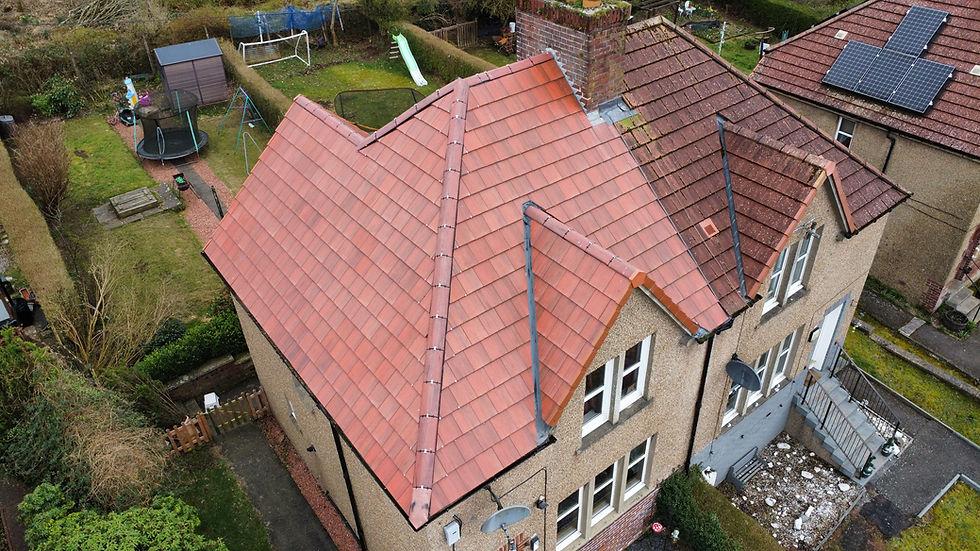
Some bricks and stones are simply soft and absorb water, especially on old, exposed stacks. The wall of the stack gets saturated, and the damp comes through into the house even when the flashing and pointing look fine.
This one is easy to miss. If you’ve had a new roof and the chimney still leaks, the roof may not be the problem. The fix may be repairing the stack, not the roof.
6. It isn’t the chimney at all
Water travels along rafters and roof timbers, so a stain by the chimney can start higher up. A slipped slate or a failed valley above the stack can send water down to the chimney breast.
Condensation can also look like a leak, particularly in an unused flue. A good roofer works from the top down, so they find where the water enters, not just where it shows.
Quick answers
No. A sound stack shouldn’t let water in. Heavy, wind-driven rain just shows up the weak spots first.
It depends on the cause and your policy. Sudden storm damage is often covered, while wear and tear usually isn’t. Check your policy and keep your photos before you arrange repairs.
In older Scottish tenements, a stack can serve several flats, so check who is responsible before you order work. Our post on roofers in Renfrew covers shared buildings.
When to call a roofer
If water is coming in, call someone now, not after the next storm. Repairing a chimney is often a small job when it’s caught early, but a leak left for months can soak timber and insulation. Our roof repairs team can find the cause and give you a clear written quote. If the roof around the stack is worn out, a new roof may be better value than repeated patching, and we’ll tell you honestly which you need.
What customers say
People tell us the same thing after a leak: they want someone who turns up and sorts it.
“
★★★★★
“Excellent service. Turned up when they said and done a brilliant job. Thank you.”
Ben Gray
Verified customer
“
★★★★★
“Reliable, efficient, and high-quality work. Really happy with the results. Would definitely recommend! 5 star service”
Laura Clark
Verified customer
Book a Free Roof Survey
We’ll assess your roof and show you exactly what needs attention and what doesn’t.
Fill in our contact form and someone will get back to you within a couple of hours.